Your Home Should Not Be Something your body has to recover from
Your Home Should Not Be Somethingyour body has to recover from
Passive House–trained building designer Izabela Katafoni on the quiet work a poorly designed home asks of your body — and how a Perth home can be designed to carry that load instead.
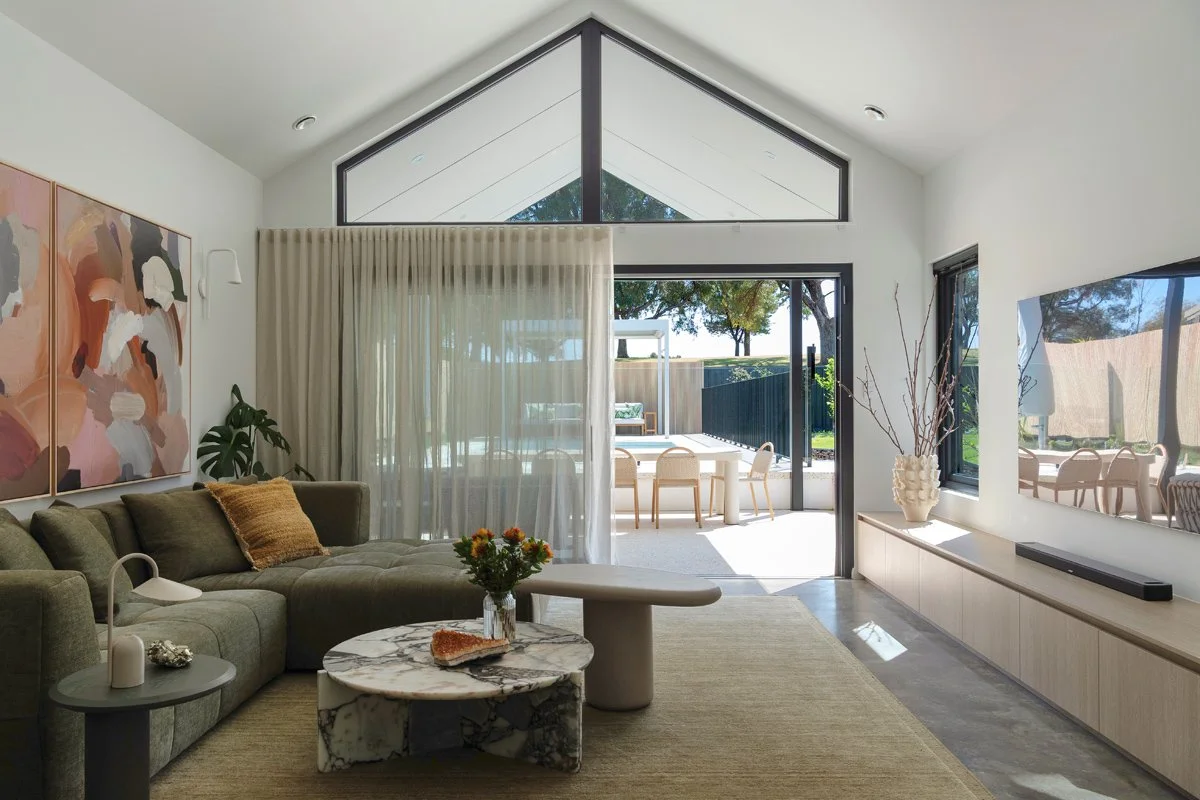
You wake at 3am, too warm, kicking off the covers. The bedroom air feels heavy by morning. The living room is glorious until 2pm, then the western sun turns it into an oven. We call this normal — but every fan, open window and thermostat adjustment is a small piece of work. And your body is quietly doing far more of that work than you realise.
A Home Is Never NeutralThe quiet work your body does at home
A home either supports the people inside it, or it quietly asks them to compensate. Most of the time, the asking goes unnoticed because none of it is dramatic.
Heat and cold. When a house swings in temperature through the day, your body works to keep you comfortable. You feel it as restless sleep, afternoon fatigue, or simply never quite settling.
Air. A closed-up room builds up moisture, odours and carbon dioxide overnight. Open the window and you let in heat, noise, dust and pollen. Most homes force a choice between fresh air and comfort.
Light. Bright, cool light late in the evening tells the body it is still daytime. Dim, flat light all day does the opposite.
Materials. Many paints, glues, carpets and engineered boards release chemicals into the air for months or years after they are installed.
A Home That Does Its Own WorkPerformance designed in, not added on
A well-designed home carries that load for you. That is the heart of Passive House thinking: comfort and performance designed in from the very first sketch, rather than added later with bigger equipment.
Living spaces face north to take in low winter sun, with eaves and shading sized to block the high summer sun. A continuous, well-sealed and well-insulated envelope keeps indoor temperatures steady and removes the draughts and hot spots that make a room uncomfortable. A heat recovery ventilation system brings in fresh, filtered air continuously and quietly — no open window required.
Inside, low-emission finishes and natural materials keep the air clean from day one. Daylight is designed in, and evening lighting is warm and low to follow the body's natural rhythm. Views, texture and planting keep you connected to something living.
Designing for PerthNot a cold-climate idea
Passive House principles were developed in Europe, but they work here when they are tuned to the way Perth actually behaves. Our summers bring long runs of hot days and harsh, low western sun in the late afternoon. Many evenings bring the relief of the sea breeze, and our winters are mild but damp.
A home designed for Perth limits western glass and shades it properly. It keeps heat out during the day and lets the house purge it at night. It captures winter sun to the north and manages moisture all year round.
These are not expensive add-ons. They are decisions made early, on paper, before a single brick is laid — which is where good design makes the biggest difference for the least cost.
Design for the Body FirstEverything else follows
Buildings are often designed to impress, to photograph well, or to sell. Those things matter, but they are not the whole job.
At Studio Origami, every decision comes back to one question: does this support the people living here, or does it ask them to adapt? Thermal comfort is not a luxury. It is what happens when a building finally stops fighting the body inside it.
What This Means for Your Perth Home
- Temperature swings, stale air, poor light and off-gassing materials all ask your body to compensate — quietly, every day.
- Passive House principles shift that work back onto the building: orientation, insulation, airtightness and filtered fresh air.
- Designed for Perth's climate, these are early design decisions, not costly add-ons.
- The result is a home that feels calm, quiet and easy to live in. Your home should not be something your body has to recover from.